
Budapest is two cities joined by bridges. Buda climbs the western hills with its castle, churches, and residential neighborhoods. Pest spreads flat on the eastern bank, dense with grand boulevards, market halls, and the layered textures of a city that has been rebuilt several times over. For street photographers, this duality creates an extraordinary range of visual environments within walking distance.
What makes Budapest particularly compelling is the visible passage of time on its buildings. Bullet holes from 1945 sit next to Art Nouveau ornaments from 1905. Communist-era apartment blocks stand across the street from freshly renovated ruin bars. The city does not hide its history, and that honesty translates into photographs that carry genuine weight.
The Danube Embankment and Bridges

The Danube riverfront is Budapest's most iconic photography location, and for good reason. The Parliament building, the Chain Bridge, and the Buda Castle create a panorama that works from multiple angles and in virtually any light condition. But the real skill is finding compositions that go beyond the postcard view.
The Shoes on the Danube Bank memorial, created by Can Togay and Gyula Pauer, offers a powerful foreground element for river compositions. Located between the Chain Bridge and Parliament on the Pest side, these 60 pairs of iron shoes commemorate the victims shot into the river during World War II. Photographing them with the Buda hills behind creates images that carry historical depth beyond the architectural beauty.
Night Photography Tip
The Parliament building is illuminated every evening from dusk until midnight. The best angle is from the Buda side, near the Batthyany Square tram stop. Use a tripod and expose for 2-4 seconds at f/8, ISO 200 for clean results with light trails from passing boats.
District VII: The Jewish Quarter and Ruin Bars
The former Jewish ghetto in District VII has become Budapest's creative center. The ruin bars, established in abandoned buildings and courtyards since the early 2000s, are visually chaotic in the best way. Szimpla Kert, the original and most famous, is an assault of textures: peeling paint, vintage furniture, graffiti art, hanging plants, and found objects arranged with deliberate randomness.
During the day, the neighborhood's streets reveal a different character. The Dohany Street Synagogue, Europe's largest, anchors the area with its Byzantine-Moorish architecture. The surrounding blocks contain Art Nouveau apartment buildings with ornate balconies, courtyards visible through open gates, and small workshops that have operated for decades.
For street photography, weekend mornings offer the best balance: enough people for candid moments, enough quiet for architectural studies. The Saturday flea market on Garay Square (Garay Teri Piac) brings an older generation of vendors and buyers whose faces and gestures tell stories without words.
Buda Castle District and Fisherman's Bastion
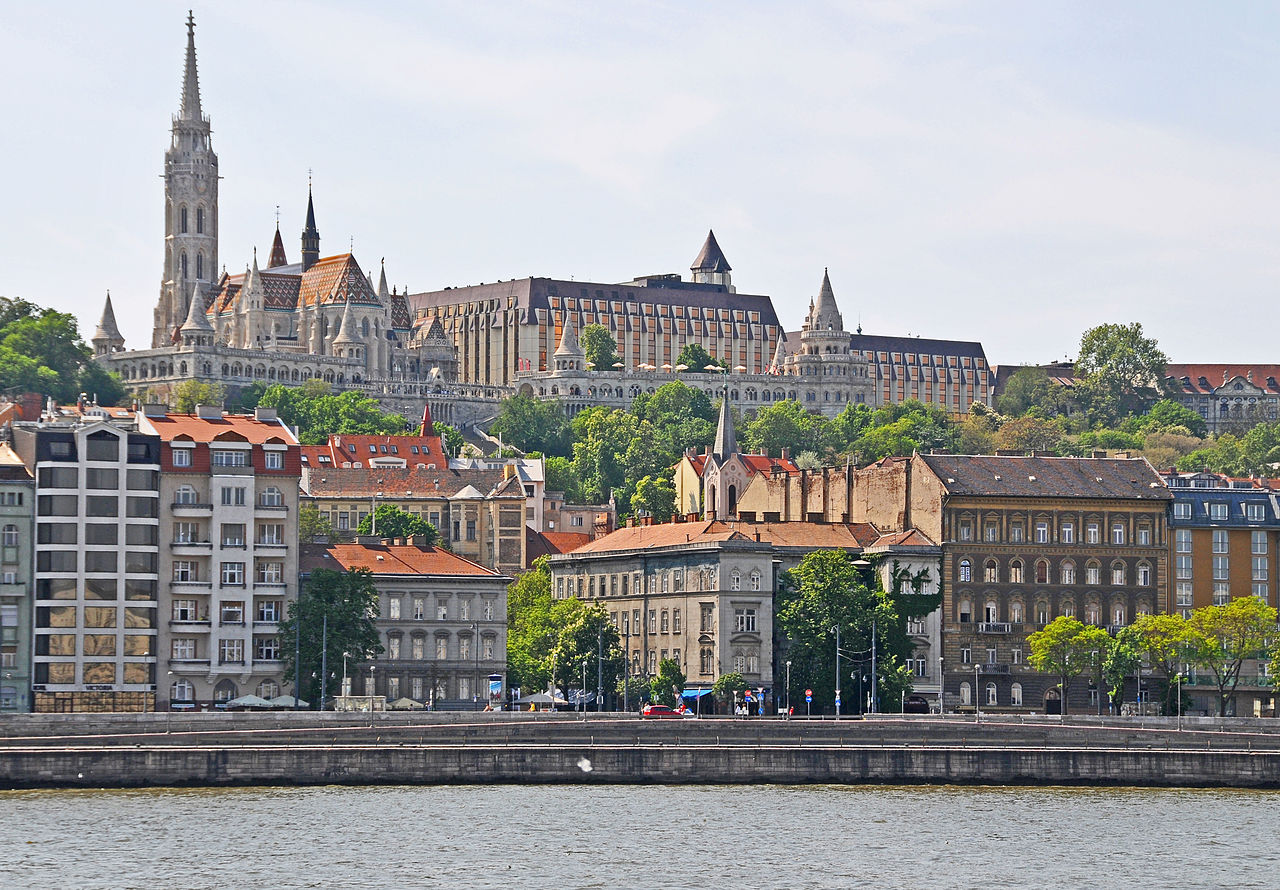
The Castle District on Buda's hilltop is a quieter, more architectural photography environment. The Fisherman's Bastion, built in neo-Romanesque style between 1895 and 1902, was designed specifically as a viewing terrace, and its white stone arches frame the Pest panorama like natural picture frames.
Visit before 9 AM to photograph the Bastion without crowds. The early morning light from the east illuminates the Parliament across the river while the Bastion itself remains in cool shadow, creating a natural contrast that works exceptionally well in both color and black-and-white processing.
The Matthias Church, with its distinctive Zsolnay ceramic tile roof, is worth studying from multiple angles. The diamond pattern appears different depending on the light direction, and the south facade catches afternoon sun that brings out the full color range of the tiles.
The Grand Boulevard (Nagykörut)
This semi-circular boulevard traces the line of the old city wall and passes through some of Budapest's most visually rich neighborhoods. Unlike the tourist-focused Danube promenade, the Grand Boulevard feels like a working city. Trams rattle past neo-Classical and Eclectic buildings, market vendors sell fruit from street stalls, and the cafes are filled with locals rather than tour groups.
Key photography points along the Boulevard include:
- The New York Cafe: Often called the most beautiful cafe in the world, its interior of frescoes, marble columns, and gilded mirrors is a photography subject in itself (interior photography permitted with a purchase)
- The Central Market Hall (Nagyvasarcsarnok): Hungary's largest covered market, built in 1897. The ground floor food stalls and upstairs handicraft vendors create busy, colorful scenes
- Corvin Quarter: This neighborhood around the Corvin cinema preserves bullet-scarred buildings from the 1956 Hungarian Revolution, creating powerfully textured backgrounds
Practical Street Photography Tips for Budapest
Best Times to Shoot
Budapest's latitude (47.5 N) means significant variation in golden hour timing across seasons. In summer, golden hour begins around 7:30 PM and the sky stays light until nearly 9 PM. In winter, useful light ends by 4 PM, but the low sun angle creates dramatic shadow patterns on building facades throughout the afternoon.
Getting Around
The M1 metro line (yellow), dating from 1896, is itself a photography subject, with original tile work and iron fixtures at stations like Vorosmarty Square and Opera. Tram lines 2 (along the Pest embankment) and 19 (along the Buda side) provide moving viewpoints of the river. A day pass covers all public transport and costs about 5 EUR.
Etiquette and Legal Considerations
Street photography in public spaces is legally permitted in Hungary. However, be sensitive in residential areas and around the Dohany Street Synagogue, especially during services. Inside churches and museums, check for photography restrictions before shooting. Most ruin bars welcome photography, but ask before photographing staff or performers.
Local Insight
For a less-photographed perspective, cross the river to Gellert Hill and walk the paths behind the Citadella. The viewpoints here are less crowded than the Bastion and offer wider panoramic compositions that include the full sweep of the Danube with both the Chain Bridge and Liberty Bridge in frame.
Budapest rewards photographers who take time to explore beyond the headline attractions. Some of the most compelling images come from the quiet residential streets of Buda's Rozsadomb neighborhood, the industrial textures of District IX, or the faded grandeur of apartment building stairwells that are often left open during the day. Keep your camera ready and your eyes open, this is a city that reveals itself gradually.
